
Creating a home office that feels both cozy and productive can significantly improve your work-from-home experience. Whether you’re setting up a dedicated room or carving out a small nook, designing a space that promotes focus and comfort is key. In this post, we’ll explore practical tips to help you build a home office that meets your needs and supports your daily tasks.
Choosing the Right Location
Consider Natural Light
One of the easiest ways to boost productivity and mood is by working near a window. Natural light helps reduce eye strain and keeps you energized. If a window isn’t available, opt for bright, warm lighting that mimics daylight to keep your space inviting.
Minimize Distractions
Choose a quiet spot away from high-traffic areas in your home. This helps reduce interruptions and makes it easier to concentrate. If noise is a concern, consider using noise-cancelling headphones or a white noise machine.
Ergonomics Matter
Invest in a Comfortable Chair
A supportive chair that encourages good posture is essential for long hours at your desk. Look for adjustable chairs that support your lower back and allow your feet to rest flat on the floor.
Find the Ideal Desk Height
Your desk should allow your arms to rest comfortably with elbows at about a 90-degree angle. If your desk is too high or low, it could cause discomfort and decrease productivity.
Position Your Monitor Properly
Place your computer screen at eye level and about an arm’s length away to reduce neck and eye strain. Using a monitor riser or adjustable stand can help achieve the correct height.
Personalize Your Space
Add Cozy Elements
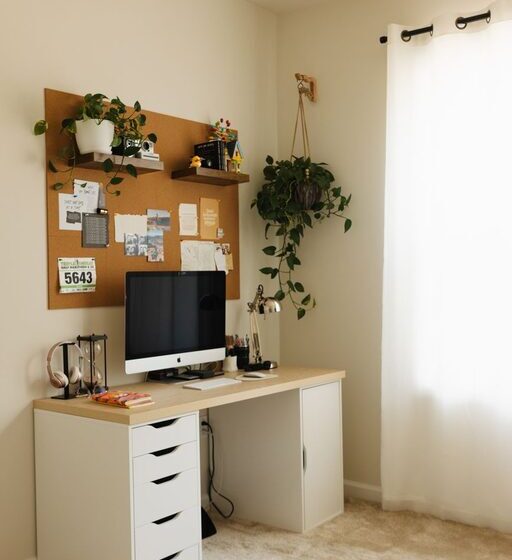
Incorporate items like soft blankets, cushions, or a small rug to make your workspace feel warm and inviting. These touches can help you feel more comfortable and reduce stress.
Display Inspiring Decor
Surround yourself with meaningful artwork, photos, or motivational quotes. These elements can boost your mood and motivation during work hours.
Use Plants
Adding greenery to your office can improve air quality and create a calming atmosphere. Low-maintenance plants like succulents or pothos are ideal for indoor workspaces.
Stay Organized
Declutter Regularly
Keep your desk surface clean by only having essential items within reach. Regularly sort through papers and supplies to avoid clutter buildup.
Utilize Storage Solutions
Use shelves, drawers, or organizers to store supplies neatly. Labeling containers can make it easier to find what you need quickly.
Create a Filing System
Whether digital or physical, having a filing system allows you to keep track of important documents and reduces misplaced items.
Optimize Lighting
Layer Your Lighting
Combine overhead lights with task lighting such as desk lamps. Adjustable lamps let you control brightness depending on your activity.
Choose the Right Bulbs
Opt for bulbs that emit a warm to neutral white light (around 3000–4000K). This range helps maintain focus without causing eye fatigue.
Set Boundaries and Routine
Define Work Hours
Create a schedule that sets clear start and end times for work. Having a routine helps maintain work-life balance.
Signal Your Work Mode
Use physical cues, like closing a door or setting up a “do not disturb” sign, to let others know when you’re focused on work.
Take Regular Breaks
Incorporate short breaks to stretch, hydrate, and rest your eyes. These pauses help maintain energy and prevent burnout.
Technology and Connectivity
Ensure Reliable Internet
A strong internet connection is crucial for effective communication and completing tasks efficiently.
Organize Cables
Use cable clips or sleeves to keep cords tidy and avoid tangled messes under your desk.
Use Ergonomic Accessories
Consider tools like an external keyboard, mouse, or a laptop stand to improve comfort and reduce strain.
Final Thoughts
Designing a home office that balances coziness with productivity is a personal process. By focusing on comfort, organization, and atmosphere, you can create a workspace that not only helps you get the job done but also feels inviting and stress-free. Start with these tips, and adjust your setup as you discover what works best for your unique work habits and preferences.